Showing posts with label Vegetables. Show all posts

Saturday, 12 August 2017

Natural Compound in Fruit and Veg Could Help Prevent Weight Gain


Eating foods high in flavonoids, such as apples, berries and peppers, may prevent long-term weight gain, research suggests.

Fruit and vegetables including blueberries, apples and onions contain high levels of a naturally occurring compound that could help prevent weight gain, a large study has found.
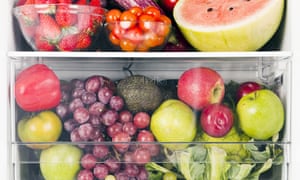
Fruits and vegetables inside fridgeResearchers studied 124,086 US men and women, who were followed for up to 24 years, and found that eating more fruit and vegetables containing flavonoids was associated with a small but potentially significant reduction in weight gain.
Flavonoids are plant compounds found in various foods and drinks, including tea, chocolate and wine. Because they are rich in antioxidants they are thought to help prevent cell damage.


The researchers, from Harvard and the University of East Anglia (UEA), suggest in a paper published in the BMJ on Wednesday that they may also be able to help prevent obesity and associated problems. However, as it is purely an observational study, no causal effect can be established.

Prof Aedin Cassidy, of UEA’s Norwich Medical School, said: “There’s a lot of interest in flavonoids with cardiovascular health and diabetes. We think the different subclasses [of flavonoids] have different effects.

“A lot of people, when they go on a diet, have to do something radical. This is basically saying that something which is good for you already may also be good for weight maintenance, particularly in middle age when weight gain is associated with increased chance of getting heart disease and strokes.”

Participants were drawn from three different US studies. One featured men with an average age of 47, while the two others were women-only with average ages of 36 and 48 respectively.
The participants self-reported their weight, lifestyle habits and any recently diagnosed diseases via questionnaires every two years between 1986 and 2011. In addition, they self-reported their diet every four years and on that basis the association between their dietary intake of seven flavonoid subclasses and weight change was analysed. Results, which were adjusted for a range of dietary and lifestyle factors, were consistent across men and women, and different ages.

The greatest association was found for anthocyanins, flavonoid polymers and flavonols. Blueberries and strawberries were the main source of anthocyanins, tea and apples were the main source of flavonoid polymers and tea and onions the main source of flavonols. Men gained on average a kilo over a four-year period and women gained a couple of kilos, but those with higher consumption of certain flavonoids did not put on weight.

Each small increase (standard deviation) of daily intake, for example 10mg of anthocyanins, was associated with 0.16-0.23lbs (0.07-0.10kg) less weight gained over four-year intervals. But a single serving per day of many fruits could potentially have a greater impact. For example, half a cup of blueberries provides about 121mg – or about 12 standard deviations – of anthocyanins.

The authors suggest that eating fruit and vegetables with high levels of flavonoids, such as apples, pears, berries and peppers, may therefore be a valuable tool in preventing obesity.

Previous research has suggested flavonoid subclasses may decrease energy intake, decrease fat absorption or increase glucose uptake in muscle.

Naveed Sattar, professor of metabolic medicine at the University of Glasgow, said caution should be employed in interpreting the results. In truth, individuals who eat more high-flavonoid foods have other habits which lead them to put on less weight – or other effects of high-flavonoid foods may be responsible, such as fibre content in fruits and vegetables. Hence, one must be very careful about recommending high-flavonoid foods as beneficial to health.

“Our lab conducted a recent randomised-placebo controlled trial of polyphenol/flavonoid-rich drinks and saw no effect over the short term (one month) on markers linked to heart disease or diabetes, and longer-term trials are needed to prove effects on weight.”

Source:

Sunday, 2 July 2017

12 Most-Asked Nutrition Questions—Answered

A registered dietitian answer the most common questions asked about food


Q: I don't like veggies. Is it okay to get my five-a-day from fruit only? 
A: Fruits and vegetables contain about the same vitamins and minerals, but vegetables offer a wider array of compounds that we think protect you from cancer, heart disease, and more, explains Cindy Moore, RD, of the American Dietetic Association. For instance, broccoli and other cruciferous vegetables—but not a single fruit—are packed with sulphoraphane, which appears to fight breast cancer. It's okay to doctor your veggies with a tablespoon of grated cheese or a pat of butter.


Q: If you drink 100% juice, is it as good for you as a whole fruit or vegetable?
A: Yes and no. On the plus side, juice may contain more nutrients than a single piece of produce. An 8-oz glass of orange juice has 100 mg of vitamin C; an orange has 75 mg. But juice offers almost none of the fiber found in produce, and it packs calories. An 8-oz glass of orange juice has 120 calories and 0 g of fiber; an orange has only 60 calories and 3 g of fiber. The bottom line: Make sure that you mostly eat whole produce.


Q: I could swear that I'm addicted to sugar? Is this possible?
A: Not the way you can be addicted to a drug. But sugar triggers the release of opiates in the brain, which makes you feel good. Unfortunately, eating too much sugar is a recipe for weight gain. Start learning to rely on fruit. It offers naturally occurring sugar—but less than what's in most added-sugar treats—plus vitamins, minerals, and fill-you-up fiber.


Q: If the orange juice label says "not from concentrate," does that mean it's better for you?
A: Not really. "Not from concentrate" juice is nutritionally almost identical to its "from concentrate" counterpart. One caveat: Orange juice that isn't from concentrate may not be pasteurized (put through a heating process that kills dangerous bacteria such as E. coli). So if you do opt for the not-from-concentrate variety, check the carton. The FDA requires unpasteurized juices to carry warning labels.

  Q: Is there a way to estimate the calories in fruits and vegetables? 

A: Sure, and it's easy. On average, one small piece or ½ cup of fresh fruit contains about 60 calories. Starchy veggies such as potatoes and corn average 50 calories per ½ cup, while all other veggies such as broccoli and tomatoes average just 25 calories per ½ cup.

Q: Can you get too much fiber? Adding up my fiber from all sources, I get 40 g a day.
A: It depends. We recommend 20 to 35 g daily—an optimum amount to prevent constipation, heart disease, and possibly cancer. Getting more fiber than that means that you absorb less of important minerals such as zinc, iron, and calcium. If you're getting extra fiber from eating lots of vegetables, beans, whole grains, and fruit, you probably get enough extra minerals to compensate. But if you're taking a fiber supplement, it could be leaving you short on some minerals.


Q: My teenage daughter wants to be a total vegan, but I'm not sure that's safe. Is it?

A: It can be safe—and even healthy—if she chooses the right foods, advises Judith Stern, ScD, professor of nutrition at the University of California, Davis. "She can't just eat bagels, bananas, and soft drinks," Dr. Stern points out. Three reminders:
  • Concentrate on calcium from calcium-fortified orange juice or soy milk. 
  • Encourage her to eat whole grains, beans, nuts, seeds, and a wide variety of fruits and vegetables. 
  • Provide her with a multivitamin.


Q: Suddenly, everyone I know is eating pork rinds and beef jerky. What's your opinion?
A: Our advice is to treat them like potato chips—in other words, munch in moderation. The reason: Ounce for ounce, pork rinds and most brands of beef jerky have at least as many calories as potato chips (plus gobs of saturated fat). Eat too many calories from any source, and you'll gain, not lose. (Don't be duped by labels; the serving size for pork rinds may be half that for chips.) If you enjoy jerky, you can find low-fat varieties with fewer calories.


Q: I always take my vitamin with my morning tea. But now I hear that tea can keep some vitamins from being absorbed. Is that true?
A: Glad you asked: Compounds in tea called tannins interfere with absorption of the mineral iron. If your doctor has told you you're low on iron, it's best not to drink your tea within 90 minutes of taking a multivitamin with iron or any iron supplements that have been prescribed for you. But don't ditch your tea: It's a powerful stew of antioxidants that may fight cancer and protect your heart.


Q: I've heard that those high-protein diets can hurt your bones. Is this true?
A: Only if you don't consume plenty of calcium. High levels of protein slightly increase how much calcium your body excretes. But if you're getting extra calcium in your diet, extra protein won't rob you of bone density, says Robert P. Heaney, MD, a calcium specialist at Creighton University in Omaha, NE. How much do you need? If you're on a high-pro diet such as the Atkins diet or the Zone, Dr. Heaney recommends 1,500 to 2,000 mg of calcium daily from a combo of diet and supplements.


Q: I stick to a weight loss plan better if I eat the same thing every day. Is that okay, if the foods are healthy?
A: If that's the only way you can achieve a healthy weight, yes. But you need to do this: Make an appointment with a registered dietitian to make sure that your lineup of foods gives you a broad range of vitamins, minerals, and healthy phytochemicals. Otherwise, you could choose a dozen healthy foods, but every single one might be low in, for example, vitamin C, or zinc, or both!


Q: Is it okay to fast most of the day, then eat just one big meal?
A: Sorry, but no. "Your body needs to be refueled throughout the day," explains Patty Kirk, RD, nutritionist at The Cooper Clinic in Dallas. "Eat just one meal, and you'll be dragging most of the time." And when you consume 50 g of fat at one sitting—easy to do at one big meal—your arteries lose flexibility for the next 4 hours, a period of time that one researcher has described as a "heart attack danger zone." Eat three meals a day or a series of minimeals on a regular basis.

Source:

Thursday, 29 June 2017

The Mediterranean Diet.....Reduces Cancer, Improves Heart Health plus Many More Benefits

8 Ways to Follow the Mediterranean Diet for Better Health


Find out the 8 secrets of the Mediterranean diet and how to eat to reap the health benefits of the Mediterranean Diet.
Watch: What Is the Mediterranean Diet?Perhaps the world’s healthiest diet, the Mediterranean Diet is abundant in fruits, vegetables, whole grains, legumes and olive oil. It features fish and poultry—lean sources of protein—over red meat, which contains more saturated fat. Red wine is consumed regularly but in moderate amounts.
Research suggests that the benefits of following a Mediterranean-style eating pattern may be many: improved weight loss, better control of blood glucose (sugar) levels and reduced risk of depression, to name a few. Eating like a Mediterranean has also been associated with reduced levels of inflammation, a risk factor for heart attack, stroke and Alzheimer’s disease


Tip 1: Replace butter and margarine with healthy oils as often as possible. 

Watch: What Is the Mediterranean Diet?Use olive oil—a good source of heart-healthy monounsaturated fats—as your primary fat for cooking and baking. A high-quality extra-virgin olive oil seasoned with balsamic vinegar is delicious for dipping bread and is a healthier alternative to butter (which is rich in the saturated fats associated with increased risk of heart disease). Other plant-based oils, such as canola or walnut oil, are also rich in heart-healthy monounsaturated and beneficial omega-3 fatty acids.


Tip 2: Switch up your proteins.

Watch: What Is the Mediterranean Diet?Swap out most of your red meat and get your protein from skinless chicken and turkey, fish, beans, nuts and other plants. By displacing red meat, you’ll lower your saturated-fat intake. Start by making a few small changes. Aim to eat fish of any kind—except for fried, of course—twice a week. Fatty fish, such as salmon or tuna are especially good choices: they are rich in omega-3s, a type of polyunsaturated fat, linked with improved heart health. Make the focus of the meal whole grains and vegetables and think of meat as a flavoring; for example, use a little diced pancetta in a tomato sauce for pasta. If you do have a hankering for a steak, it’s OK to indulge—just do so occasionally, choose a lean cut, like top loin, sirloin, flank steak and strip steak, and limit your portion size to 3 to 4 ounces.


Tip 3: Eat veggies all day long. 

 Watch: What Is the Mediterranean Diet?Most people don’t get enough! Aim for 3 to 8 servings of vegetables a day. A serving size is 1/2 to 2 cups depending on the vegetable. Pick vegetables in a variety of colors to get a range of antioxidants and vitamins. Start your day out with a spinach and Cheddar omelet, have a bowl of vegetable soup for lunch and have roasted carrots and a green salad for dinner. Big green salads are a great way to include several vegetable servings at once, so treat yourself to one daily.


 Tip 5: Snack on nuts, seeds or low-fat cheese or dairy instead of processed snack foods. 

Watch: What Is the Mediterranean Diet?Snack on a handful of almonds, walnuts or sunflower seeds in place of chips, cookies or other processed snack foods, which are often loaded with sugars, saturated fat and trans fats. Calcium-rich low-fat cheese or low-fat and nonfat plain yogurt with fresh fruit are other healthy and portable snacks.


Tip 6: Enjoy fruit for dessert. 

 Watch: What Is the Mediterranean Diet?Generally a good source of fiber, vitamin C and antioxidants, fresh fruit is a healthy way to indulge your sweet tooth. If it helps you to eat more, add a little sugar—drizzle slices of pear with honey or sprinkle a little brown sugar on grapefruit. Keep fresh fruit visible at home and keep a piece or two at work so you have a healthful snack when your stomach starts growling. Lots of grocery stores stock exotic fruit—pick a new one to try each week and expand your fruit horizons.


 Tip 7: If you drink, moderate your consumption to no more than a glass or two with a meal. 

 Watch: What Is the Mediterranean Diet?Research indicates that people who drink moderately are less likely to have heart disease than those who abstain. Alcohol appears to raise “good” HDL cholesterol. Wine, in particular, “thins” the blood (making it less prone to clotting) and also contains antioxidants that prevent your arteries from taking up LDL cholesterol, a process that can lead to plaque buildup. Remember, “1 drink” equals 12 ounces of beer, 5 ounces of wine or 11/2 ounces of liquor


Tip 8: Set aside enough time to savor every bite. 
 Watch: What Is the Mediterranean Diet?Eating like a Mediterranean is as much lifestyle as it is diet. Instead of gobbling your meal in front of the TV, slow down and sit down at the table with your family and friends to savor what you’re eating. Not only will you enjoy your company and your food, eating slowly allows you to tune in to your body’s hunger and fullness signals. You’re more apt to eat just until you’re satisfied than until you’re busting-at-the-seams full.


Source:

Weight loss diet: Five vitamins and minerals that slash fat and build muscle

IF YOU want to get ripped make sure you include these five nutrients in your diet. Eating healthy foods and exercising is the bes...