Showing posts with label Cancer. Show all posts

Wednesday, 16 August 2017

The Whole Truth About Whole Grains

11 reasons to make the switch now.....

 Want to statistically reduce your risk of death from all causes (in other words, your total mortality rate) by 15% just by making one dietary change? Choose whole grains whenever you can.

We all know we're supposed to eat more whole grains. We know they're "good" for us (full of fiber, phytochemicals, and vitamins and minerals). Yet most Americans eat less than one serving of whole grains a day. So what's stopping us?

Maybe it's our fear of "brown" food. But you might be surprised how easy it can be to embrace the brown if you set your mind to it. Some of you will have no problems switching to whole-grain bread but will draw the line at whole-wheat pasta. For others, it might be the other way around.
The bottom line is that switching to whole grains is one of the most important things you can do for your health. So make the switch everywhere you can -- and draw the line wherever that may be for you.

related content

For me, about the only refined-grain products I eat are the occasional sourdough and French bread, pizza crust (when I buy it out), and sometimes pasta (which I always cook al dente because it has a lower glycemic index this way). I used to think I could never accept whole-wheat noodles as "pasta." But never say never! In developing the recipes for my next book, I used a whole-wheat pasta blend and I really started to like it.
And don't think that you can keep eating white, refined-grain products and just supplement them with some extra fiber. Research suggests that the various nutritional components of whole grains work together to affect our health.

A Bite of Whole-Grain History

When the industrialization wave hit America in the later 1800s, a new way of milling and mass refining took hold in the grain business and never let go. Removing the bran and germ seemed like a good idea at the time, since it meant that grain products could sit on store shelves much longer without spoiling.
But the worldwide epidemic of B-vitamin deficiencies (pellagra and beriberi) that followed was only the beginning. Frankly, we are only just realizing the nutritional fallout from almost eliminating whole grains from our diet over the past hundred years.

11 Ways Grains Are Great

Here's a quick list of all the ways that whole grains benefit your body. After reading it, you may ask yourself, "What don't they do?"

1. They're digested slowly.

Whole grains are digested more slowly than refined grains, which has beneficial effects on blood sugar and insulin (keeping levels of both down). A recent study found that the more whole grains men and women ate, the lower their fasting insulin levels were. And this is a good thing.

2. They reduce mortality rates.

After analyzing data from more than 15,000 people aged 45-65, researchers from the University of Minnesota School of Public Health found that as whole-grain intake went up, total mortality (the rate of death from all causes) went down.

3. They help reduce the risk of type 2 diabetes.

The Nurses' Health Study found that women who ate more than 5 grams of fiber from whole-grain cereals daily had about 30% less risk of developing type 2 diabetes than those who ate less than 2.5 grams of whole-grain fiber a day.

Other research found that women who ate a diet low in cereal fiber and high on the sugar (glycemic) index doubled their risk of type 2 diabetes.

4. They help control weight.

One study found that women who ate three or more servings of whole-grain foods a day had significantly lower body mass indexes (BMIs) than those eating less than one serving a day. (This was found in men, too, but the link was more significant in women.)
Another study found that women whose diets included the most whole grains were half as likely to gain a lot of weight over a 12-year period as those who ate the least whole grains. This slimming effect was seen even in teens.

5. They may protect against metabolic syndrome.

Research has found that metabolic syndrome -- a condition that raises the risk of diabetes, heart disease, and stroke -- was found much less often in people who ate the most cereal fiber and whole grains compared with those who ate the least.

6. They reduce risk of heart disease.

At least 25 studies have found that people who regularly eat whole grains have a lower risk of heart disease.
"The evidence is quite consistent and convincing that people who eat at least one serving of whole grains a day have a lower risk of heart disease and stroke," reports Mark Pereira, PhD, a nutritional epidemiologist at Harvard Medical School.
In studying the dietary habits of male health professionals, researchers found that for every 10 gram increase in cereal fiber eaten each day, the risk of heart attack was reduced by nearly 30%. A more recent study found this beneficial effect is even stronger in women.

8. They cut cholesterol levels.

Researchers at Northwestern University Medical School in Chicago found that adding oats to an already low-fat diet helped women cut their blood cholesterol by an additional 8 or 9 mg/dL after only three weeks. (That came on top of the 12 mg/dL reduction seen with the low-fat diet alone!)


Antioxidants found in oats cut cholesterol by suppressing the molecules that make blood cells stick to artery walls. When these cells stick to artery walls and cause inflammation, plaque deposits build up and narrow the passageways where blood flows, leading to "hardening of the arteries."

9. They reduce blood pressure.

Eating foods containing barley decreases blood pressure and improves several other risk factors for heart disease, according to a recent study. (Other studies of high-fiber, whole-grain foods have also reported significant reductions in blood pressure.)
The researchers also noticed a decrease in total cholesterol (an average of 21% reduction in those eating lots of soluble fiber, such as that found in barley and oats), and "bad" cholesterol. Levels of "good cholesterol" either increased or did not change.

10. They can decrease your risk of stroke.

A recent Harvard study found that a diet with large amounts of whole-grain foods was associated with a decreased risk of stroke in women.

11. They reduce cancer risks.

More than 40 studies looking at 20 types of cancer have suggested that regularly eating whole grains reduces cancer risk.
It's thought that whole grains may accomplish this by blocking DNA damage, suppressing the growth of cancer cells, providing antioxidant protection, and preventing the formation of carcinogens. The particular components of whole grains that may be protective include fiber; antioxidants including vitamins (like vitamin E) and minerals (like selenium); and various phytochemicals.
Among the types of cancer that whole grains help protect against are gastrointestinal cancers such as stomach and colon cancers, along with cancers of the oral cavity, pharynx, esophagus, and larynx.

Your Whole Grain Line-Up

If you're ready to go brown, whole-wheat bread is a great place to start. But don't stop there.
Here are nine common whole-grain foods that you'll probably find at your supermarket:
  • Brown rice
  • Oats
  • Whole-wheat flour
  • Rye flour
  • Barley
  • Buckwheat
  • Bulgur (steamed and dried cracked wheat)
  • Millet
  • Quinoa
And don't think that cooking them has to be difficult and time-consuming. Here are a couple of easy (and yummy) ways to prepare some whole-grain favorites.

 Source:

Sunday, 2 July 2017

10 Things You Don’t Know About Sugar...The Silent Killer!!!!


Image result


Excessive sugar in the diet is not the best idea when it comes to healthy living. Nonetheless, few of us are consuming sugar in recommended moderate amounts and most of us are eating tons of it. In fact, worldwide we are consuming about 500 extra calories a day from sugar. That’s just about what you would need to consume if you wanted to gain a pound a week.

Most people know that sugar is not good for them, but for some reason, they think the risk of excess sugar consumption is less than that of having too much saturated and trans fat, sodium or calories. Perhaps it’s sugar’s lack of sodium or fat that make it the “lesser of several evils,” or perhaps people are simply of the mind frame that what they don’t know won’t hurt them. If you really knew what it was doing to your body, though, you might just put it at the top of your “foods to avoid” list. Here are ten things that may surprise you about sugar.

1. Sugar can damage your heart
While it’s been widely noted that excess sugar can increase the overall risk for heart disease, a 2013 study in the Journal of the American Heart Association displayed strong evidence that sugar can actually affect the pumping mechanism of your heart and could increase the risk for heart failure. The findings specifically pinpointed a molecule from sugar (as well as from starch) called glucose metabolite glucose 6-phosphate (G6P) that was responsible for the changes in the muscle protein of the heart. These changes could eventually lead to heart failure. Approximately half of the people that are diagnosed with heart failure die within five years.


2. Sugar specifically promotes belly fat
Adolescent obesity rates have tripled in the past 30 years and childhood obesity rates have doubled. Many of us are aware of the data that demonstrates just how literally big our future is looking, but beyond the studies and all the initiatives to curb childhood obesity, one needs only to visit an amusement park, school or mall to truly see what is happening. One factor that seems to inflict obese children is fat accumulation in the trunk area of the body. Why? One cause may be the increase in fructose-laden beverages. A 2010 study in children found that excess fructose intake (but not glucose intake) actually caused visceral fat cells to mature — setting the stage for a big belly and even bigger future risk for heart disease and diabetes.

 Image result for dangers of sugar

3. Sugar is the true silent killer
Move over salt and hypertension, you’ve got competition. Sugar, as it turns out, is just as much of a silent killer. A 2008 study found that excess fructose consumption was linked to an increase in a condition called leptin resistance. Leptin is a hormone that tells you when you’ve had enough food. The problem is, we often ignore the signal our brain sends to us. For some people though, leptin simply does not want to work, leaving the person with no signal whatsoever that the body has enough food to function. This in turn can lead to over consumption of food and consequently, obesity. Why the silent killer? Because it all happens without symptoms or warning bells. If you’ve gained weight in the past year and can’t quite figure out why, perhaps you should look at how much fructose you’re feeding your body.


4. Sugar may be linked to cancer production and may effect cancer survival
In the world of nutrition, it’s hard to talk about sugar without talking about insulin. That’s because insulin is sugar’s little chaperone to the cells, and when too much of it is consumed, or our insulin does not work (probably because we’re eating too much sugar) and the body revolts. One connection that has been well documented in the literature is the link between insulin resistance and cancer . A 2013 study found that sugars in the intestine triggered the formation of a hormone called GIP (controlled by a protein called β-catenin that is completely dependant on sugar levels), that in turn, increases insulin released by the pancreas. Researchers found that β-catenin may in fact affect the cells susceptibility to cancer formation. Further studies have found negative associations between high sugar and starch intake and survival rates in both breast cancer patients and colon cancer patients.
Related image


5. Your sugar “addiction” may be genetic
If you’ve ever said, “I’m completely addicted to sugar,” you may actually be correct. A recent study of 579 individuals showed that those who had genetic changes in a hormone called ghrelin consumed more sugar (and alcohol) than those that had no gene variation. Ghrelin is a hormone that tells the brain you’re hungry. Researchers think that the genetic components that effect your ghrelin release may have a lot to do with whether or not you seek to enhance a neurological reward system through your sweet tooth. Findings with this study were similar to study conducted in 2012 as well.


6. Sugar and alcohol have similar toxic liver effects on the body
A 2012 paper in the journal Nature, brought forth the idea that limitations and warnings should be placed on sugar similar to warnings we see on alcohol. The authors showed evidence that fructose and glucose in excess can have a toxic effect on the liver as the metabolism of ethanol — the alcohol contained in alcoholic beverages had similarities to the metabolic pathways that fructose took. Further, sugar increased the risk for several of the same chronic conditions that alcohol was responsible for. Finally, if you think that your slim stature keeps you immune from fructose causing liver damage, think again. A 2013 study found that liver damage could occur even without excess calories or weight gain.


7. Sugar may sap your brain power
When I think back on my childhood, I remember consuming more sugar than I probably should have. I should have enjoyed my youth back then, because unfortunately, all the sugar may have accelerated the aging process. A 2009 study found a positive relationship between glucose consumption and the aging of our cells. Aging of the cells consequently can be the cause of something as simple as wrinkles to something as dire as chronic disease. But there is other alarming evidence that sugar may affect the aging of your brain as well. A 2012 study found that excess sugar consumption was linked to deficiencies in memory and overall cognitive health. A 2009 study in rats showed similar findings.


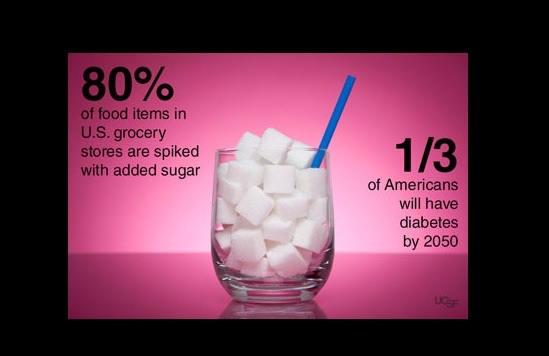
8. Sugar hides in many everyday “non-sugar” foods
While many of my patients strive to avoid the “normal” sugary culprits (candy, cookies, cake, etc.), they often are duped when they discover some of their favorite foods also contain lots of sugar. Examples include tomato sauce, fat free dressing, tonic water, marinates, crackers and even bread.


9. An overload of sugar (specifically in beverages) may shorten your life
A 2013 study estimated that 180,000 deaths worldwide may be attributed to sweetened beverage consumption. The United States alone accounted for 25,000 deaths in 2010. The authors summarize that deaths occurred due to the association with sugar-sweetened beverages and chronic disease risk such as diabetes, heart disease and cancer.


10. Sugar is making us fat
I figured I’d leave the most obvious fact for last. While you may be aware that too many calories from any source will be stored as fat if not burned, what you may not connect is that the lack of other nutrients in sugar actually makes it much easier to eat gobs of it with no physical effects to warn us of the danger that lurks. Foods rich in fiber, fat and protein all have been associated with increased fullness. Sugar will give you the calories, but not the feeling that you’ve had enough. That’s why you can have an entire king-size bag of licorice (with it’s sky high glycemic index at the movies and come out afterwards ready to go for dinner.

On a final note, it’s important to point out that simple sugars from milk (in the form of lactose) don’t display the same negative health effects that we see in the literature when reviewing sugar’s effects on the body. Simple sugars coming from fruit are also less concerning given their high amounts of disease-fighting compounds and fiber.

Source:

Weight loss diet: Five vitamins and minerals that slash fat and build muscle

IF YOU want to get ripped make sure you include these five nutrients in your diet. Eating healthy foods and exercising is the bes...