Showing posts with label Belly Fat. Show all posts

Wednesday, 27 September 2017

An end to middle-aged belly fat?

Scientists discover how to target the cells which give us a flabby middle

  • Older adults have a harder time losing belly fat than younger people 
  • Yale University researchers have found that belly fat is linked to inflammation
  • Drugs that target this inflammation could be used to help elderly people burn fat, which will lessen their chances of developing fatal diseases
  • More than 35% of US adults are overweight, and government efforts are struggling to control the obesity epidemic
Relentless belly fat that plagues middle-age and elderly adults could be caused by inflammation, a new study has found.
The report's researchers concluded that drugs that target this inflammation could spike their metabolism and help them burn more fat, which decreases their risk of chronic illnesses.
High amounts of body fat can lead to fatal diseases such as diabetes and heart disease, and it can cause strokes.
Experts are hopeful that the new analysis provides a way to lessen the effects of the obesity epidemic in America, where more than 35 percent of adults are overweight.
A new study from Yale University has found that belly fat is linked to inflammation. The research suggests that by targeting this inflammation with medicines, older adults could shed pounds around their waistline more efficiently (file photo)
A new study from Yale University has found that belly fat is linked to inflammation. The research suggests that by targeting this inflammation with medicines, older adults could shed pounds around their waistline more efficiently.
Research has shown that older adults have higher amounts of body fat, regardless of their weight.
But being active does not help them shed the fat around their waistline as easily as younger adults. This is because their bodies cannot burn energy found in their fat cells as efficiently.
This cycle leads to an accumulation of belly fat and, until know, the reason that fat cells were unresponsive when older people worked out was unknown.
But researchers at Yale University, led by Professor Vishwa Deep Dixit, discovered that the culprit is inflammation.  

THE DANGERS OF AMERICA'S OBESITY PROBLEM 

As the number of obese people in the US continues to rise, experts are warning of the dangers of being overweight. Obesity can lead to heart disease, strokes, some types of cancer, and diabetes.
The CDC has provided these tips to help you control your weight and avoid fatal ailments:
  • Use tools such as BMI calculators and waist circumference measurements to make sure you are staying in a healthy weight range
  • Track your calorie intake so you are more aware of how much you are consuming
  • Look up the nutritional value of foods you are considering eating
  • Try to implement the minimum amount of physical activity you should be getting into your schedule
  • Choose healthy recipes over ones that call for foods that are harmful to your body
For the study they focused on specialized cells known as macrophages, which are typically involved in controlling infections. They discovered a new type of macrophage that resides on the nerves in belly fat, which becomes inflamed with age. These inflamed cells do not allow signals to be sent to fat cells telling them to burn their stored energy.

The team's discovery could lead to new treatments, such as drugs targeting inflammation, to help the elderly get a flatter stomach. Future research on the topic will look at immune cells and their interaction with nerves, and how this relationship controls health and disease.

Study author Christina Camell said: 'The purpose of our research is to achieve greater understanding of immune cell interactions with nerves and fat cells to potentially reduce belly fat, enhance metabolism and improve performance in the elderly.'

Researchers at the University of Tennessee Health Science Center and the University of Bonn in Germany also worked on the new report.

The research was funded by grants from the National Institutes of Health, the Glenn Foundation for Medical Research and the Cure Alzheimer's Fund.

Monday, 28 August 2017

11 Reasons Why You're Not Losing Belly Fat

Belly fat won't budge? Genetics, hormones, or easy-to-fix mistakes could be to blame. 

Belly fat blues

Getting rid of your belly bulge is important for more than just vanity's sake. Excess abdominal fat—particularly visceral fat, the kind that surrounds your organs and puffs your stomach into a "beer gut"—is a predictor of heart disease, type 2 diabetes, insulin resistance, and some cancers. If diet and exercise haven't done much to reduce your pooch, then your hormones, your age, and other genetic factors may be the reason why. Read on for 11 possible reasons why your belly fat won't budge.


belly-fat-older

You're getting older

As you get older, your body changes how it gains and loses weight. Both men and women experience a declining metabolic rate, or the number of calories the body needs to function normally. On top of that, women have to deal with menopause. "If women gain weight after menopause, it's more likely to be in their bellies," says Michael Jensen, MD, professor of medicine in the Mayo Clinic's endocrinology division. In menopause, production of the hormones estrogen and progesterone slows down. Meanwhile, testosterone levels also start to drop, but at a slower rate. This shift in hormones causes women to hold onto weight in their bellies. The good news: you can fight this process. Read on.


belly-fat-spinclass

You're doing the wrong workout

A daily run or Spin class is great for your heart, but cardio workouts alone won't do much for your waist. "You need to do a combination of weights and cardiovascular training," says Sangeeta Kashyap, MD, an endocrinologist at Cleveland Clinic. Strength training increases muscle mass, which sets your body up to burn more fat. "Muscle burns more calories than fat, and therefore you naturally burn more calories throughout the day by having more muscle," says Kate Patton, a registered dietitian at Cleveland Clinic. Patton recommends 250 minutes of moderate-intensity exercise or 125 minutes of high-intensity exercise a week.

processed-foods

You're eating too many processed foods

"Refined grains like white bread, crackers, and chips, as well as refined sugars in sweetened drinks and desserts increase inflammation in our bodies," says Patton. "Belly fat is associated with inflammation, so eating too many processed foods will hinder your ability to lose belly fat." Natural foods like fruits, vegetables, and whole grains are full of antioxidants, which have anti-inflammatory properties and may therefore actually prevent belly fat, Patton says.

meat-fat

You're eating the wrong fats

The body doesn't react to all fats in the same way. Research correlates high intake of saturated fat (the kind in meat and dairy) to increased visceral fat, says Patton. On the other hand, monounsaturated fats (the kind in olive oil and avocados) and specific types of polyunsaturated fats (mainly omega-3s, found in walnuts, sunflower seeds, and fatty fish like salmon) have anti-inflammatory effects in the body, and if eaten in proper portions may do your body good. But Patton warns that eating too much fat of any kind increases your calorie intake and could lead to weight gain, so enjoy healthy fats in moderation.

belly-fat-crossfit

Your workout isn't challenging enough

To banish stubborn belly fat, you have to ramp up your workouts. In a study published in the journal Medicine and Science in Sports and Exercise, people who completed a high-intensity workout regimen lost more belly fat than those who followed a low-intensity plan. (In fact, the low-intensity exercises experienced no significant changes at all.) "You need to exercise at full intensity because the end goal is to burn more calories, and high intensity exercise does just that," says Natalie Jill, a San Diego, Calif.-based certified personal trainer. High intensity workouts mean you're going all out for as long as you can. If this sounds intimidating, think of it this way: you'll burn more calories in less time.


belly-fat-planking

You're doing the wrong exercises

Doing crunches until the cows come home? Stop it! When you're down to your final inches of belly fat, the dreaded crunch won't be the exercise that finally reveals your six-pack. "You can't spot reduce," Jill says. Instead, she suggests doing functional exercises that use the muscles in your core—abdominals, back, pelvic, obliques—as well as other body parts. "These exercises use more muscles, so there is a higher rate of calorie burn while you are doing them," she says. Planks are her favorite functional exercise—they activate not just your core muscles but also your arm, leg, and butt muscles.


belly-fat-stress

You're stressed

Tight deadlines, bills, your kids—whatever your source of stress, having too much of it may make it harder for you to drop unwanted pounds, especially from your middle. And it's not just because you tend to reach for high-fat, high-calorie fare when you're stressed, though that's part of it. It's also due to the stress hormone cortisol, which may increase the amount of fat your body clings to and enlarge your fat cells. Higher levels of cortisol have been linked to more visceral fat.


fat-not-enough-sleep

You're skimping on sleep

If you're among the 30% of Americans who sleep less than six hours a night, here's one simple way to whittle your waistline: catch more Zs. A 16-year study of almost 70,000 women found that those who slept five hours or less a night were 30% more likely to gain 30 or more pounds than those who slept 7 hours. The National Institutes of Health suggest adults sleep seven to eight hours a night.

belly-fat-size

You're apple shaped

If you tend to pack the pounds around your middle rather than your hips and thighs, then you're apple shaped. This genetic predisposition means ridding yourself of belly fat will be harder, Dr. Kashyap says, but not impossible.


belly-fat-sick

You're sick

If your testosterone levels are high—something that can occur with polycystic ovary syndrome (PCOS)—you might have difficulty losing weight. "If you're an apple shape and overweight, it's a good idea to see your doctor," Dr. Kashyap says, since there may also be a chance that you are prediabetic or diabetic.

go-for-run

You're unmotivated

Are you committed to the work needed to lose belly fat? "Reducing belly fat takes a combination approach of a low-calorie diet that is high in fiber and low in carbohydrates and sugar along with cardiovascular and weight training," Dr. Kashyap says. "If you are willing to do the work, you can move past genetics and lose it."

Source:

Sunday, 2 July 2017

10 Things You Don’t Know About Sugar...The Silent Killer!!!!


Image result


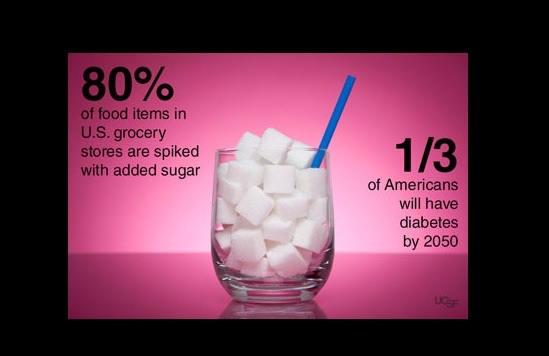
Excessive sugar in the diet is not the best idea when it comes to healthy living. Nonetheless, few of us are consuming sugar in recommended moderate amounts and most of us are eating tons of it. In fact, worldwide we are consuming about 500 extra calories a day from sugar. That’s just about what you would need to consume if you wanted to gain a pound a week.

Most people know that sugar is not good for them, but for some reason, they think the risk of excess sugar consumption is less than that of having too much saturated and trans fat, sodium or calories. Perhaps it’s sugar’s lack of sodium or fat that make it the “lesser of several evils,” or perhaps people are simply of the mind frame that what they don’t know won’t hurt them. If you really knew what it was doing to your body, though, you might just put it at the top of your “foods to avoid” list. Here are ten things that may surprise you about sugar.

1. Sugar can damage your heart
While it’s been widely noted that excess sugar can increase the overall risk for heart disease, a 2013 study in the Journal of the American Heart Association displayed strong evidence that sugar can actually affect the pumping mechanism of your heart and could increase the risk for heart failure. The findings specifically pinpointed a molecule from sugar (as well as from starch) called glucose metabolite glucose 6-phosphate (G6P) that was responsible for the changes in the muscle protein of the heart. These changes could eventually lead to heart failure. Approximately half of the people that are diagnosed with heart failure die within five years.


2. Sugar specifically promotes belly fat
Adolescent obesity rates have tripled in the past 30 years and childhood obesity rates have doubled. Many of us are aware of the data that demonstrates just how literally big our future is looking, but beyond the studies and all the initiatives to curb childhood obesity, one needs only to visit an amusement park, school or mall to truly see what is happening. One factor that seems to inflict obese children is fat accumulation in the trunk area of the body. Why? One cause may be the increase in fructose-laden beverages. A 2010 study in children found that excess fructose intake (but not glucose intake) actually caused visceral fat cells to mature — setting the stage for a big belly and even bigger future risk for heart disease and diabetes.

 Image result for dangers of sugar

3. Sugar is the true silent killer
Move over salt and hypertension, you’ve got competition. Sugar, as it turns out, is just as much of a silent killer. A 2008 study found that excess fructose consumption was linked to an increase in a condition called leptin resistance. Leptin is a hormone that tells you when you’ve had enough food. The problem is, we often ignore the signal our brain sends to us. For some people though, leptin simply does not want to work, leaving the person with no signal whatsoever that the body has enough food to function. This in turn can lead to over consumption of food and consequently, obesity. Why the silent killer? Because it all happens without symptoms or warning bells. If you’ve gained weight in the past year and can’t quite figure out why, perhaps you should look at how much fructose you’re feeding your body.


4. Sugar may be linked to cancer production and may effect cancer survival
In the world of nutrition, it’s hard to talk about sugar without talking about insulin. That’s because insulin is sugar’s little chaperone to the cells, and when too much of it is consumed, or our insulin does not work (probably because we’re eating too much sugar) and the body revolts. One connection that has been well documented in the literature is the link between insulin resistance and cancer . A 2013 study found that sugars in the intestine triggered the formation of a hormone called GIP (controlled by a protein called β-catenin that is completely dependant on sugar levels), that in turn, increases insulin released by the pancreas. Researchers found that β-catenin may in fact affect the cells susceptibility to cancer formation. Further studies have found negative associations between high sugar and starch intake and survival rates in both breast cancer patients and colon cancer patients.
Related image


5. Your sugar “addiction” may be genetic
If you’ve ever said, “I’m completely addicted to sugar,” you may actually be correct. A recent study of 579 individuals showed that those who had genetic changes in a hormone called ghrelin consumed more sugar (and alcohol) than those that had no gene variation. Ghrelin is a hormone that tells the brain you’re hungry. Researchers think that the genetic components that effect your ghrelin release may have a lot to do with whether or not you seek to enhance a neurological reward system through your sweet tooth. Findings with this study were similar to study conducted in 2012 as well.


6. Sugar and alcohol have similar toxic liver effects on the body
A 2012 paper in the journal Nature, brought forth the idea that limitations and warnings should be placed on sugar similar to warnings we see on alcohol. The authors showed evidence that fructose and glucose in excess can have a toxic effect on the liver as the metabolism of ethanol — the alcohol contained in alcoholic beverages had similarities to the metabolic pathways that fructose took. Further, sugar increased the risk for several of the same chronic conditions that alcohol was responsible for. Finally, if you think that your slim stature keeps you immune from fructose causing liver damage, think again. A 2013 study found that liver damage could occur even without excess calories or weight gain.


7. Sugar may sap your brain power
When I think back on my childhood, I remember consuming more sugar than I probably should have. I should have enjoyed my youth back then, because unfortunately, all the sugar may have accelerated the aging process. A 2009 study found a positive relationship between glucose consumption and the aging of our cells. Aging of the cells consequently can be the cause of something as simple as wrinkles to something as dire as chronic disease. But there is other alarming evidence that sugar may affect the aging of your brain as well. A 2012 study found that excess sugar consumption was linked to deficiencies in memory and overall cognitive health. A 2009 study in rats showed similar findings.


8. Sugar hides in many everyday “non-sugar” foods
While many of my patients strive to avoid the “normal” sugary culprits (candy, cookies, cake, etc.), they often are duped when they discover some of their favorite foods also contain lots of sugar. Examples include tomato sauce, fat free dressing, tonic water, marinates, crackers and even bread.


9. An overload of sugar (specifically in beverages) may shorten your life
A 2013 study estimated that 180,000 deaths worldwide may be attributed to sweetened beverage consumption. The United States alone accounted for 25,000 deaths in 2010. The authors summarize that deaths occurred due to the association with sugar-sweetened beverages and chronic disease risk such as diabetes, heart disease and cancer.


10. Sugar is making us fat
I figured I’d leave the most obvious fact for last. While you may be aware that too many calories from any source will be stored as fat if not burned, what you may not connect is that the lack of other nutrients in sugar actually makes it much easier to eat gobs of it with no physical effects to warn us of the danger that lurks. Foods rich in fiber, fat and protein all have been associated with increased fullness. Sugar will give you the calories, but not the feeling that you’ve had enough. That’s why you can have an entire king-size bag of licorice (with it’s sky high glycemic index at the movies and come out afterwards ready to go for dinner.

On a final note, it’s important to point out that simple sugars from milk (in the form of lactose) don’t display the same negative health effects that we see in the literature when reviewing sugar’s effects on the body. Simple sugars coming from fruit are also less concerning given their high amounts of disease-fighting compounds and fiber.

Source:

Weight loss diet: Five vitamins and minerals that slash fat and build muscle

IF YOU want to get ripped make sure you include these five nutrients in your diet. Eating healthy foods and exercising is the bes...